
ABOUT US
The terms pressure washing, soft washing and power washing are used interchangeably in many scenarios, and there is some debate as to whether they are actually different processes. They are very definitely different!
Pressure Washing can easily damage surfaces while Soft Washing would be ineffective, and vice-versa. Power Washing includes both.
WE DO BOTH - WHEN AND WHERE APPROPRIATE
Pressure washing is the use of high-pressure water spray to remove loose paint, mold, grime, dust, mud, and dirt from surfaces and objects such as buildings, vehicles and concrete surfaces. The volume of a mechanical pressure washer is expressed in gallons or liters per minute The pressure, expressed in pounds per square inch is designed into the pump but can be varied by adjusting the unloader valve. Machines that produce pressures from 750 to 30,000 psi or more are available.
A pressure washing surface cleaner is a tool consisting of two to four high-pressure jets on a rotating bar that swivels when water is flowing. This action creates a uniformed cleaning pattern that can clean flat surfaces at a rapid rate.
Soft Washing is a cleaning method using low pressure water. It was originally coined by companies selling biocide solution that was mixed with the water. More recently, the term "softwashing" has been used to describe any form of spraying chemicals at buildings where harmful solutions (typically bleach) are used to remove mildew, bacteria, algae and other organic stains from roofs and other building exteriors.
It is so named to differentiate the method from pressure washing. The Asphalt Roofing Manufacturers Association recommends low-pressure bleach or detergent assisted washing as the preferred method for cleaning asphalt roofs in order to prevent damage to the shingles.[1]
Soft washing can use a hand pump agricultural sprayer or motorized sprayer to apply a water-based, biodegradable disinfecting cleaning solution to kill the mold, mildew, bacteria, algae, fungus, moss and more on exterior home and building surfaces.

 House WashingWe use low-pressure soft washing because it is the ONLY recommended method of safely cleaning the exterior of homes, buildings and other delicate services. But don’t worry your house won’t be any less clean. Our cleaning agents are the perfect mix of effective and safe and combined with the low pressure washing, cleans siding beautifully. |  Concrete & Asphalt1. Prevents Mildew, Mold, and Other Harmful Growths 2. Limits Weeds 3. Eliminates Stains 4. Increases Safety 5. Saves Time and Exertion 6. A Cost-Effective Method 7. The Weather Effect 8. Improves Curb Appeal and Home Value | 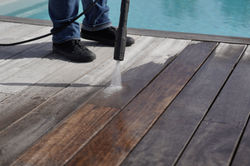 DecksThere is a common misconception that just pressure washing a deck prior to staining is all you need to do in order to prep your deck for stain. Pressure washing can help, but if you want your stain to last, using a good deck cleaner and brightener will provide the best results. No finish will last very long if applied to a dirty surface. |
|---|
 Trash Cans, Dumpsters & Dumpster PadsDumpster pads are some of the dirtiest areas of any commercial space. These 10 to 15-foot concrete slabs are constantly exposed to trash, waste, and harmful bacteria. If they are not regularly cleaned, you run the risk of several hazards, including exposure to infection, infestations from insects and rodents, and terrible stains and odors that will drive away even the most loyal customers. Cleaning your dumpster pads is a dirty job, and you should not have to do it yourself. Contact us today! |  Hydro-Sand BlastingHigh pressure water blasting not only removes old coatings and rust, it also eliminates deeply embedded crystallized salt, resulting in a remarkable reduction of chloride levels on surfaces leading to higher adhesion of coating and longer coating life. |
|---|
CONTACT OUR FRIENDLY FOLKS FOR MORE INFORMATION